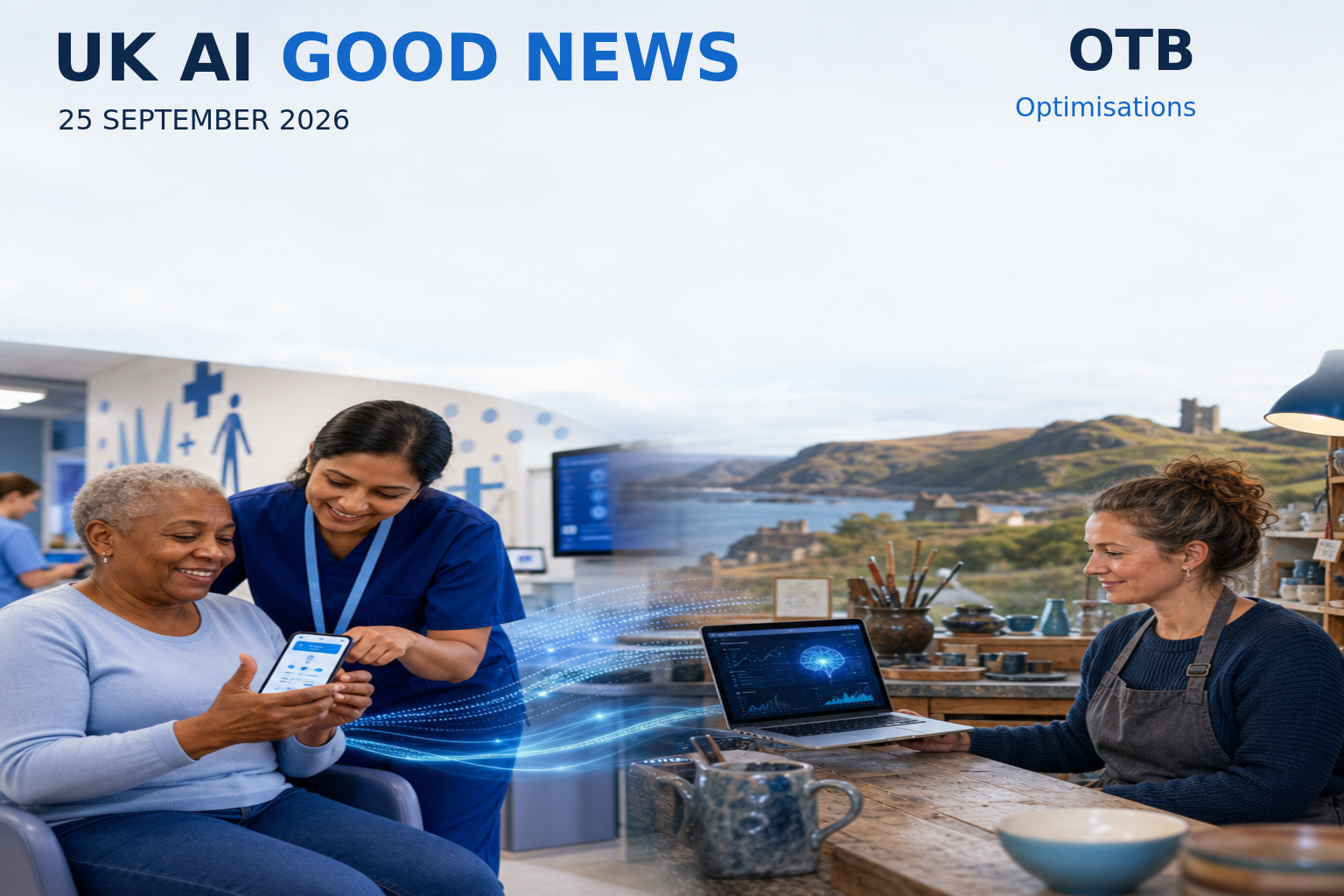
Useful AI is not just about what a system can do. It is also about who can actually benefit from it.
Today’s two UK developments bring that question into focus: new NHS guidance on digital inclusion, and a survey of Welsh businesses already using AI.
Making sure digital healthcare works for more people
NHS England launched its refreshed Digital Inclusion Framework on 24 September 2026. It is designed to help NHS organisations and partners consider inclusion when designing and delivering digital health services.
The refresh adds a chapter specifically on AI and digital inclusion. As AI-enabled tools become more common in health and care, the framework asks organisations to think about barriers and inequalities as those tools are developed and deployed.
That matters because a service that works well for somebody with a reliable connection, a recent phone and confidence using online tools might not work equally well for everybody else.
Making access easier for some patients must not mean leaving others with fewer ways to get help. The practical job is to start with the person and the problem, design accessible routes into care and keep human support available where it is needed.
It is important to be precise about what happened: this is a guidance framework to inform decisions. Its launch does not, by itself, show that AI has improved patient outcomes or reduced health inequalities. That will depend on how organisations implement and evaluate it.
Source: NHS England: refreshed framework and 24 September relaunch ↗
What Welsh businesses say they are getting from AI
There is also a practical picture emerging from businesses in Wales. NatWest Cymru’s AI Adoption Report says that, among Welsh businesses already using AI, 80% reported improved efficiency and 73% reported increased innovation.
Those are encouraging accounts from the businesses surveyed, but they are self-reported survey findings, not independently measured productivity gains. The figures describe respondents who were already using AI; they do not mean that four in five businesses across Wales have gained efficiency from it.
The report also highlights the importance of trust and human expertise. That feels like the right emphasis: use AI to take friction out of a real process, but keep people responsible for the experience and the decisions that matter.
For a small business, the sensible first question is not “What AI should we buy?” It is “What are we actually trying to make easier?” Then work out whether AI, simpler automation or a clearer process is the right answer.
Source: NatWest Cymru: Welsh business AI adoption survey ↗
People first, problem first
A patient who cannot access a digital service and a business that cannot identify a useful task for AI face very different problems. But the lesson is much the same.
Start with what people need. Make the technology useful and accessible. Keep people involved, especially when the stakes are high.
No AI for the sake of AI.
Less hype. More real-world AI progress.