
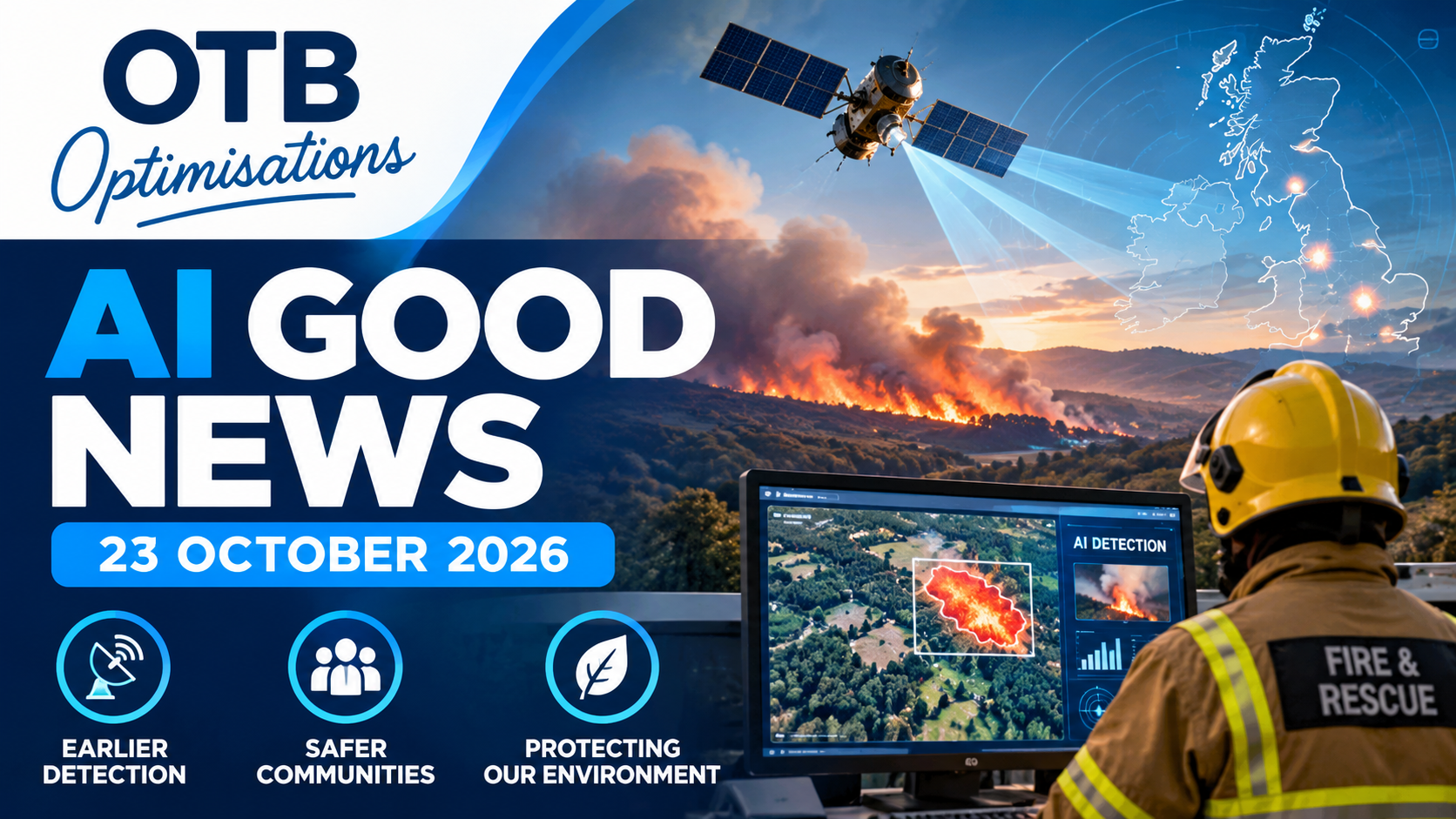
🔥 What if artificial intelligence could help firefighters spot dangerous wildfires before they spread out of control?
That’s the ambition behind a new UK government initiative revealed yesterday.
Following a devastating summer of wildfires across Britain, plans have been announced for a dedicated AI unit designed to help emergency services detect and respond to fires more quickly.
And there’s another important development showing how AI is already helping to protect the digital systems we rely on.
AI Could Help Britain Detect Wildfires Earlier
The UK government is planning a new wildfire AI unit within the National Situation Centre, which supports the country’s emergency response arrangements.
The proposed system will use artificial intelligence alongside satellite monitoring and early-warning technology to help identify dangerous fires.
The idea is straightforward.
The sooner emergency services know where a wildfire is developing, the sooner they can assess the danger and deploy resources.
That could make an enormous difference when fires threaten homes, wildlife, farmland and communities.
Why This Matters
Britain experienced its hottest summer on record in 2026, with extreme temperatures and prolonged dry conditions contributing to serious wildfires.
Firefighters faced dangerous conditions, including incidents that threatened protected landscapes and important infrastructure.
The government is responding with a wider package of measures, including up to £45 million for specialist wildfire teams and protective equipment in England, and plans to make military aircraft available for firefighting.
The proposed AI unit will form part of this broader effort.
Technology companies are also expected to contribute expertise in satellite monitoring and early-warning systems.
What’s Actually Been Achieved?
It’s important to distinguish ambition from results.
The wildfire AI unit has been announced, but it has not yet demonstrated faster detection or improved firefighting outcomes.
Those benefits still need to be established through implementation and testing.
Nevertheless, applying AI to a clearly identified public safety problem is a promising direction.
Rather than developing technology simply because it’s possible, this initiative has a practical objective: helping protect people and places from increasingly dangerous fires.
Source: UK government: Military planes and helicopters to fight wildfires from the sky ↗ — 22 October 2026.
AI Helps Expose Serious Cybersecurity Weaknesses
There’s another example of AI being put to work for public safety.
Researchers using advanced AI systems helped identify critical vulnerabilities in PHP, a programming language used extensively by websites and online services.
The discoveries enabled software maintainers and security specialists to develop fixes.
The findings were publicly disclosed on 21 October, with the UK response continuing throughout yesterday.
Britain’s National Cyber Security Centre has been coordinating protective action, warning organisations and encouraging them to update vulnerable systems.
The issue is serious enough that government websites and services in several European countries have been temporarily taken offline while security work takes place.
That disruption is significant, and the danger has not disappeared.
But the positive development is that AI has demonstrated a genuine ability to help researchers discover complicated security weaknesses.
Human experts then investigate those findings, develop fixes and coordinate the response.
It’s a useful example of AI supporting the people responsible for keeping essential digital services secure.
UK guidance: National Cyber Security Centre: Critical security issue affecting PHP ↗ — published 21 October 2026.
Discovery and disruption: Reuters: Government websites go dark after AI-discovered flaw sparks security scramble ↗ — 21 October 2026.
The Bigger Picture
These two stories represent different stages of AI progress.
In cybersecurity, AI has already contributed to a verified technical discovery, although the response to the vulnerabilities is ongoing.
In wildfire prevention, the UK is preparing to apply AI to a major public safety challenge, but the real-world benefits are still to be demonstrated.
Both highlight an important principle.
Artificial intelligence becomes genuinely valuable when it helps people solve problems that matter.
Protecting communities from fires.
Identifying dangerous weaknesses in computer systems.
Giving skilled professionals better information and tools to do their jobs.
That’s the kind of progress worth following.
Less hype. More real-world AI progress.