This is absolutely fascinating!
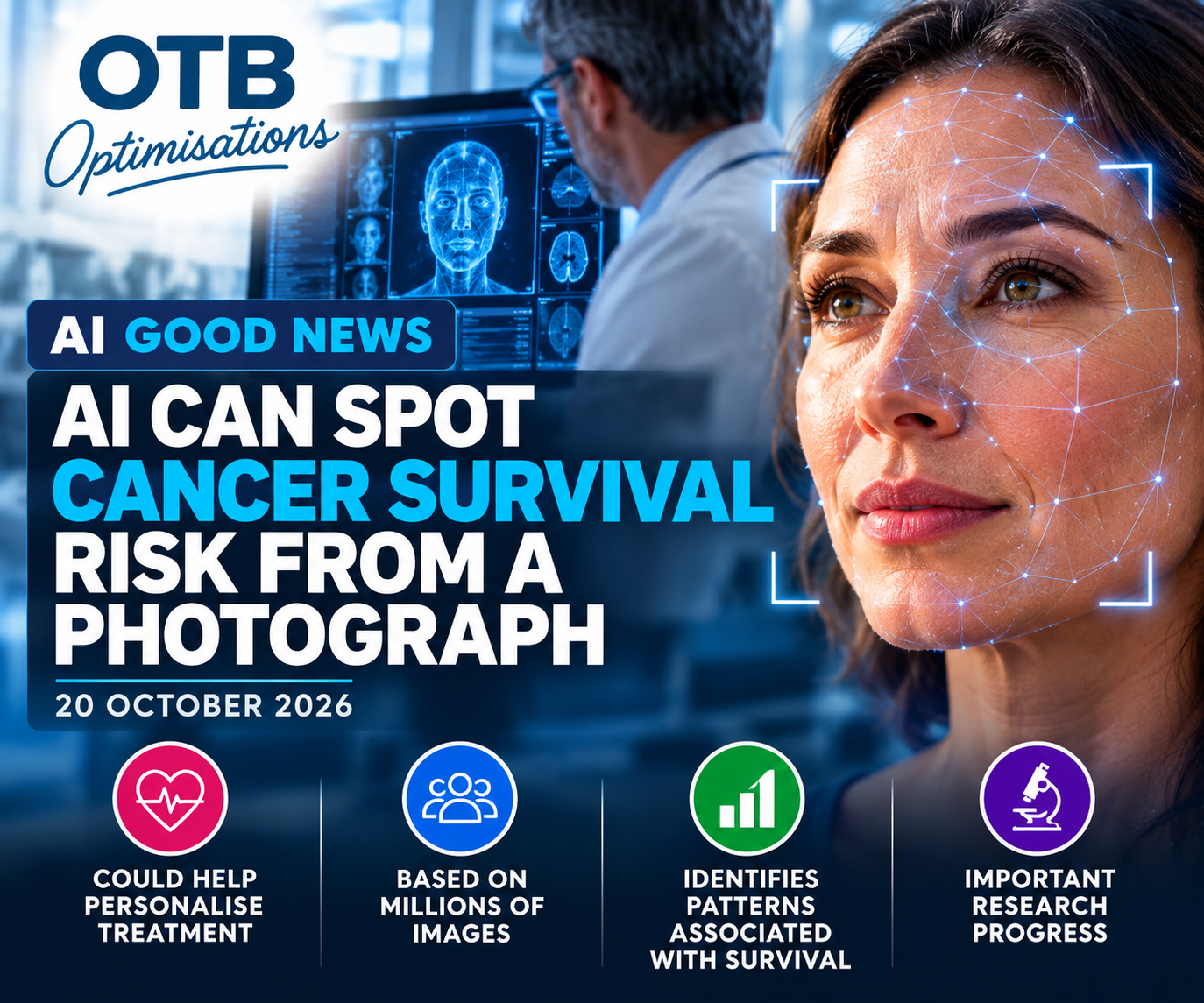
Scientists in America have developed artificial intelligence that can analyse someone’s face and identify patterns associated with their health and survival outcomes.
Researchers at Mass General Brigham trained AI models using more than 40 million facial images.
They then investigated whether the technology could identify useful patterns in patients undergoing cancer treatment.
🧬 SO HOW DOES IT WORK?
The AI analyses facial characteristics associated with biological ageing.
Researchers found that some of these patterns were also associated with survival outcomes in cancer patients.
❤️ WHY IS THIS IMPORTANT?
When doctors are deciding on cancer treatments, they need to understand more than just someone’s age.
Two people of the same age can have very different levels of physical resilience.
In the future, technology like this might provide doctors with additional information when considering treatment options.
🔬 BUT HERE’S THE IMPORTANT BIT…
This is research, not a finished medical test.
The AI cannot tell someone exactly how long they will live.
And researchers haven’t yet demonstrated that using it improves cancer treatment outcomes.
But the possibility of gaining useful medical information from something as simple as a photograph is remarkable.
Imagine how technology like this could support doctors in making more personalised treatment decisions in the future.
💬 WHAT DO YOU THINK?
Would you be comfortable with AI analysing your photograph if it could potentially help doctors make better decisions about your health?
#AIGoodNews #AIForGood #CancerResearch #MedicalAI #HealthcareInnovation #OTBOptimisations
Sources
Research announcement: Mass General Brigham: AI facial health recognition tools help physicians assess age and survival risk to guide personalized treatment ↗ — 19 October 2026.
Study linked by the researchers: Haugg and colleagues: Foundation artificial intelligence models for health recognition by use of face photographs (FAHR-Face): a model development and validation study — The Lancet Digital Health ↗.
Less hype. More real-world AI progress.