What if losing your eyesight didn’t always have to mean losing it forever?
On 8 October, researchers working on an experimental treatment connected to Harvard geneticist David Sinclair’s research announced some remarkable early observations.
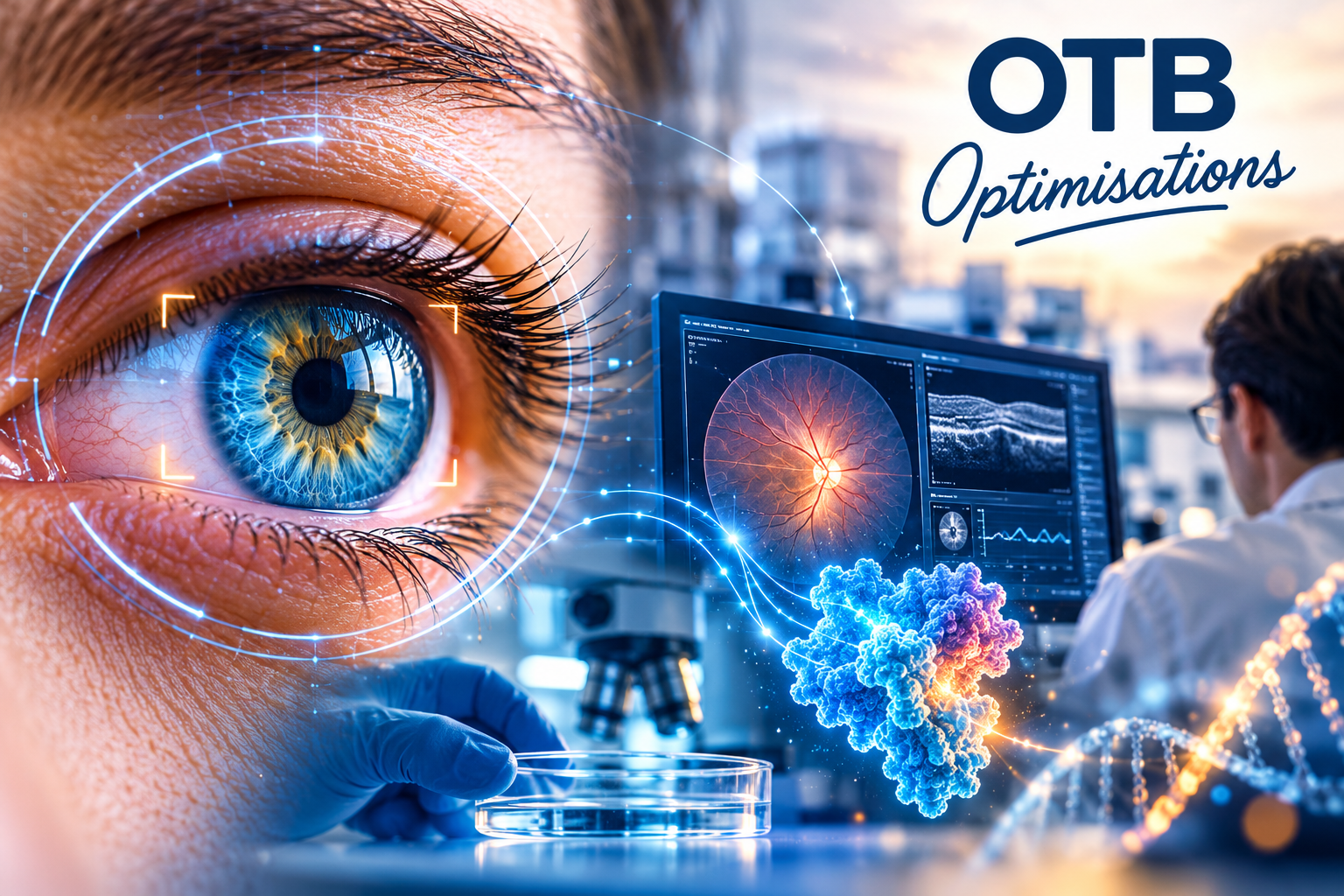
Three people with glaucoma received an experimental treatment designed to restore more youthful patterns of activity in damaged eye cells.
After 56 days, two showed improvements in visual-field testing.
The treatment, called ER-100, is being developed by Life Biosciences, a company co-founded by Sinclair.
It’s based on a fascinating concept called epigenetic reprogramming.
Rather than replacing damaged cells, researchers are investigating whether they can restore aspects of how those cells function.
And here’s where AI becomes particularly interesting.
In related research, OpenAI and Retro Biosciences have used AI to redesign proteins involved in cellular reprogramming.
Their laboratory work demonstrated that AI-designed versions could produce substantially stronger reprogramming signals than the original proteins.
That doesn’t mean AI developed Sinclair’s treatment. These are separate research programmes.
But it illustrates an extraordinary possibility.
AI could help scientists investigate and optimise biological processes that previously required enormous amounts of trial and error.
Imagine what that might eventually mean for research into vision loss, age-related disease and regenerative medicine.
We must be careful with the claims.
Sinclair’s eye-treatment results involve just three patients. The trial is primarily testing safety, and it hasn’t established that the treatment restores sight.
Likewise, the AI-designed proteins have shown promising laboratory results, not proven clinical benefits.
But the combination of advances in cellular biology and AI-assisted research could become incredibly important.
And perhaps that’s the most exciting role AI can play.
Not replacing scientists.
Helping them reach discoveries that once seemed impossibly difficult.
Less hype. More real-world AI progress.
Sources
- Life Biosciences: First-in-human data from the ongoing Phase 1 ER-100 trial ↗ — 8 October 2026.
- OpenAI: Accelerating life sciences research with Retro Biosciences ↗ — 22 August 2025.