What if artificial intelligence could help detect one of the world’s deadliest viruses while also protecting the digital systems we rely on every day?
Two developments announced yesterday show that this is already moving beyond theory.
British researchers have demonstrated an AI system capable of identifying rabies infection in laboratory images with remarkable accuracy.
Meanwhile, the UK government has revealed that AI-assisted cybersecurity pilots have already helped identify and address more than 1,000 potential vulnerabilities.
And in Birmingham, researchers have established new standards to help the NHS introduce AI into diabetic eye screening safely.
Here’s today’s positive AI news.
🦠 1. British AI research achieves 99.6% accuracy in rabies testing
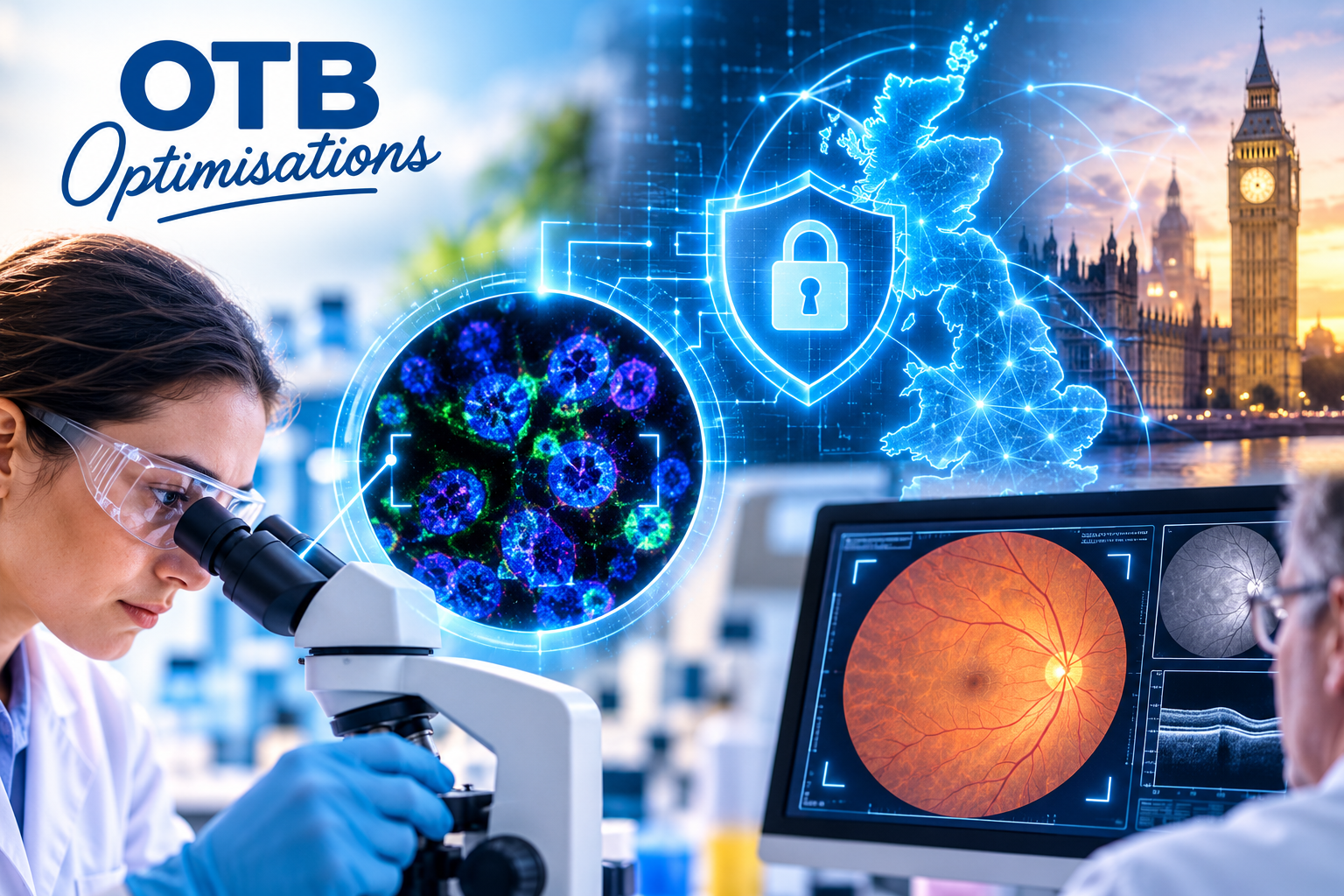
Researchers at the University of Surrey, working with the UK’s Animal and Plant Health Agency, have developed an AI system that could make rabies testing faster and more accessible.
Rabies causes approximately 59,000 human deaths worldwide each year. Once symptoms appear, the disease is almost always fatal.
Laboratory testing is therefore crucial for surveillance and assessing vaccine protection.
Traditionally, specialists must examine large numbers of microscope images to identify infected cells and measure antibodies.
That process is time-consuming and requires considerable expertise.
The researchers wanted to know whether AI could help.
Using more than 2,300 fluorescent microscope images, divided into over 36,000 annotated sections, they trained several deep-learning models.
The best-performing system achieved 99.6% accuracy in identifying infection in the study’s laboratory evaluation.
It also demonstrated promising performance when measuring antibody concentrations, which are important for assessing vaccine protection.
Why this matters
AI could eventually help laboratories analyse samples more quickly and consistently, particularly in countries where rabies remains widespread and specialist resources are limited.
The researchers believe similar technology might also be adapted to other infectious diseases.
What has actually been demonstrated?
The system performed extremely well on the laboratory images used in its evaluation. It has not yet been shown to reduce rabies deaths or improve diagnostic outcomes in routine clinical use.
The University of Surrey announced the findings on 12 October 2026, although the underlying peer-reviewed research was originally published on 30 June 2026.
Sources: University of Surrey: AI system could transform rabies testing around the world ↗ — 12 October 2026. Scientific Reports: Deep learning enables rabies virus detection and antibody quantification in cell culture ↗ — published 30 June 2026.
🔐 2. AI helps Britain identify and address more than 1,000 cybersecurity weaknesses
Here’s a particularly practical example of AI making a difference.
On 12 October, the UK government announced plans to expand its use of advanced AI to protect public services from cyberattacks.
But this wasn’t simply another announcement about what AI might achieve.
The government says its existing AI-assisted cybersecurity pilots have already helped identify and address more than 1,000 potential vulnerabilities.
These are weaknesses that could potentially be exploited by cybercriminals.
The work involves using AI to examine software and identify security problems that might otherwise require extensive manual investigation.
An earlier government case study described one pilot involving nine government organisations. It identified 407 findings, including critical weaknesses, with human security specialists reviewing the results and overseeing fixes.
The government says the broader programme will now be extended.
Why this matters
Hospitals, government departments and essential public services increasingly depend on complex digital systems.
Finding weaknesses before attackers exploit them is an important part of protecting those services.
And AI can help security professionals examine far more software than they could manually.
The important distinction: These are government-reported findings from existing pilots, not 1,000 new vulnerabilities discovered yesterday.
The announcement on 12 October concerned expanding that work.
Nevertheless, identifying and addressing real security weaknesses is a concrete, practical benefit.
Sources: UK government: Britain steps up national defences against growing AI risks ↗ — 12 October 2026. Government case study: When AI Leaves the Lab: Testing Frontier Models in Government Cyber Defence ↗ — 12 June 2026.
👁️ 3. Birmingham researchers help the NHS prepare for safer AI eye screening
Another development announced yesterday could eventually benefit millions of people living with diabetes.
Researchers at the University of Birmingham have developed a framework to help the NHS assess AI systems for diabetic eye screening.
Diabetes can damage blood vessels in the retina, potentially causing sight loss if problems aren’t identified early.
England’s diabetic eye screening programme serves almost four million people.
AI could potentially help by analysing retinal photographs and identifying images that require specialist attention.
But introducing AI into healthcare involves more than demonstrating that an algorithm can recognise a problem.
It also needs to be safe, reliable, secure and suitable for everyday NHS use.
The Birmingham researchers have established 35 consensus-based requirements covering areas including clinical performance, patient safety, cybersecurity, data governance and value for money.
Their work was reported on 12 October 2026 and published in The Lancet Digital Health.
Why this matters
The framework could help the NHS and technology developers understand exactly what AI screening systems must demonstrate before they are introduced.
That could make future adoption safer and more consistent.
This is a healthcare implementation framework, not evidence that a new AI system has already prevented sight loss.
But creating clear standards is an important step towards making promising medical technology genuinely useful.
Source: NIHR Birmingham Biomedical Research Centre: Birmingham research helps shape how NHS procures AI-based diabetic eye screening ↗ — 12 October 2026.
The bigger picture
Today’s stories demonstrate three different stages of AI progress.
In Surrey, researchers have demonstrated impressive laboratory performance.
In government cybersecurity, AI-assisted work has already helped identify and address real vulnerabilities.
And in Birmingham, researchers are establishing the standards needed to introduce AI safely into healthcare.
They aren’t all the same kind of achievement.
But each addresses an important problem.
That’s what makes AI interesting: not simply what the technology can do, but what it can help people accomplish.
Less hype. More real-world AI progress.