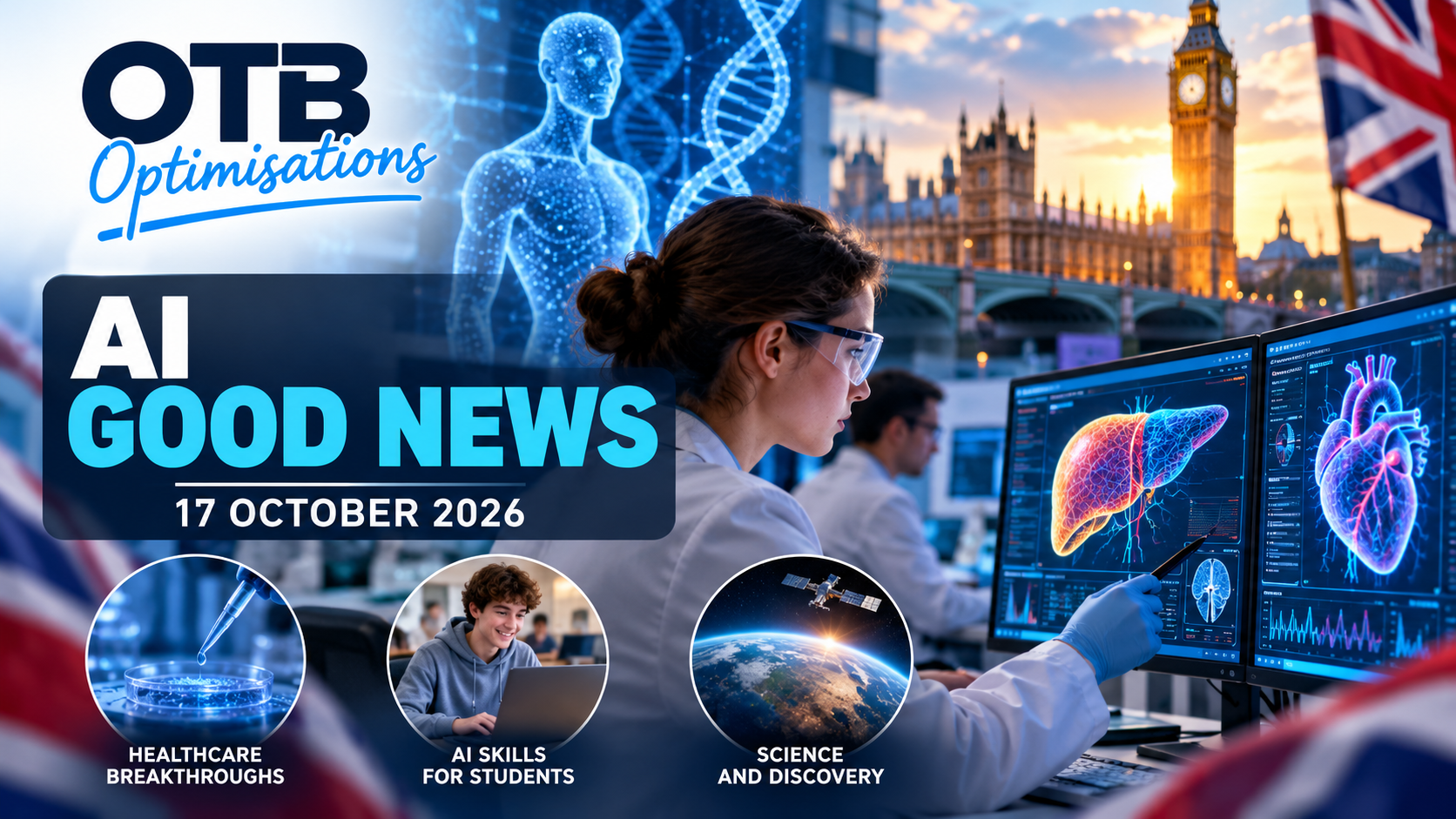
❤️ Could artificial intelligence help scientists discover better treatments for serious heart and liver diseases?
That’s the ambition behind an exciting new partnership involving British pharmaceutical company AstraZeneca and American AI biotechnology specialist Insitro.
Announced on 15 October, the collaboration will use advanced artificial intelligence to investigate some of the biological causes of diseases that have proved particularly difficult to treat.
And while this isn’t a medical breakthrough just yet, it represents another encouraging example of how AI could help researchers tackle complex healthcare challenges.
🧬 Understanding Disease at a Deeper Level
One of the biggest challenges in developing new medicines is understanding exactly why a disease develops.
Two patients can have similar symptoms but very different biological processes driving their illnesses.
That’s where AI could make a difference.
Insitro has developed an AI-powered research platform called Virtual Human, designed to analyse large amounts of biological information and identify patterns that might otherwise be difficult to recognise.
The new partnership will focus on two particularly challenging areas.
❤️ Cardiomyopathies
These are diseases affecting the heart muscle, potentially making it harder for the heart to pump blood effectively.
🩺 MASH
Metabolic dysfunction-associated steatohepatitis is a serious form of fatty liver disease involving inflammation and damage to the liver.
By examining complex biological data, researchers hope to identify new targets for medicines that could eventually help patients with these conditions.
💰 A Major Investment in AI-Powered Research
AstraZeneca has committed an initial $40 million to the collaboration.
The agreement also includes the possibility of approximately $1.46 billion in additional payments, depending on whether specified research, development and commercial milestones are achieved.
That’s an important distinction.
It doesn’t mean $1.5 billion has already been invested or that successful treatments have been developed.
It means the companies are making a substantial commitment to investigating the potential of AI-assisted drug discovery.
🔬 Why Is This Good News?
Developing a new medicine is an enormously complicated process.
Scientists must understand the biology of a disease, identify possible treatment targets, test potential medicines and eventually demonstrate that they are safe and effective in clinical trials.
Many promising ideas never reach patients.
AI could help researchers make more informed decisions during the early stages by analysing biological information and identifying promising areas for further investigation.
That doesn’t eliminate the need for laboratory experiments or clinical trials.
But it could help scientists decide which possibilities are worth pursuing.
⚠️ What Has Actually Been Achieved?
It’s important to separate a promising announcement from a demonstrated medical breakthrough.
What’s confirmed:
- AstraZeneca and Insitro have announced a new research collaboration.
- The partnership will investigate AI-assisted drug discovery for serious heart and liver diseases.
- AstraZeneca has committed $40 million upfront.
- Further payments depend on future milestones.
What’s not yet demonstrated:
- A new medicine resulting from this partnership.
- Successful clinical trials.
- Improved patient outcomes.
- A reduction in the time or cost required to develop treatments.
This is the beginning of a research programme, not the announcement of a cure.
💡 The Bigger Picture
When people talk about artificial intelligence transforming healthcare, the conversation often focuses on robots, automated diagnoses or AI assistants.
But some of the most important applications may happen quietly behind the scenes.
AI could help scientists investigate complex biological information, understand diseases more deeply and identify potential treatments that deserve further research.
This new partnership involving a major British pharmaceutical company is another step towards exploring that possibility.
And if it eventually helps researchers develop better medicines for people living with serious heart and liver conditions, that would be a genuinely meaningful achievement.
That’s the kind of progress worth watching.
Sources:
AstraZeneca: Official partnership announcement, 15 October 2026
Reuters: AstraZeneca and Insitro AI drug discovery agreement, 15 October 2026
Less hype. More real-world AI progress.