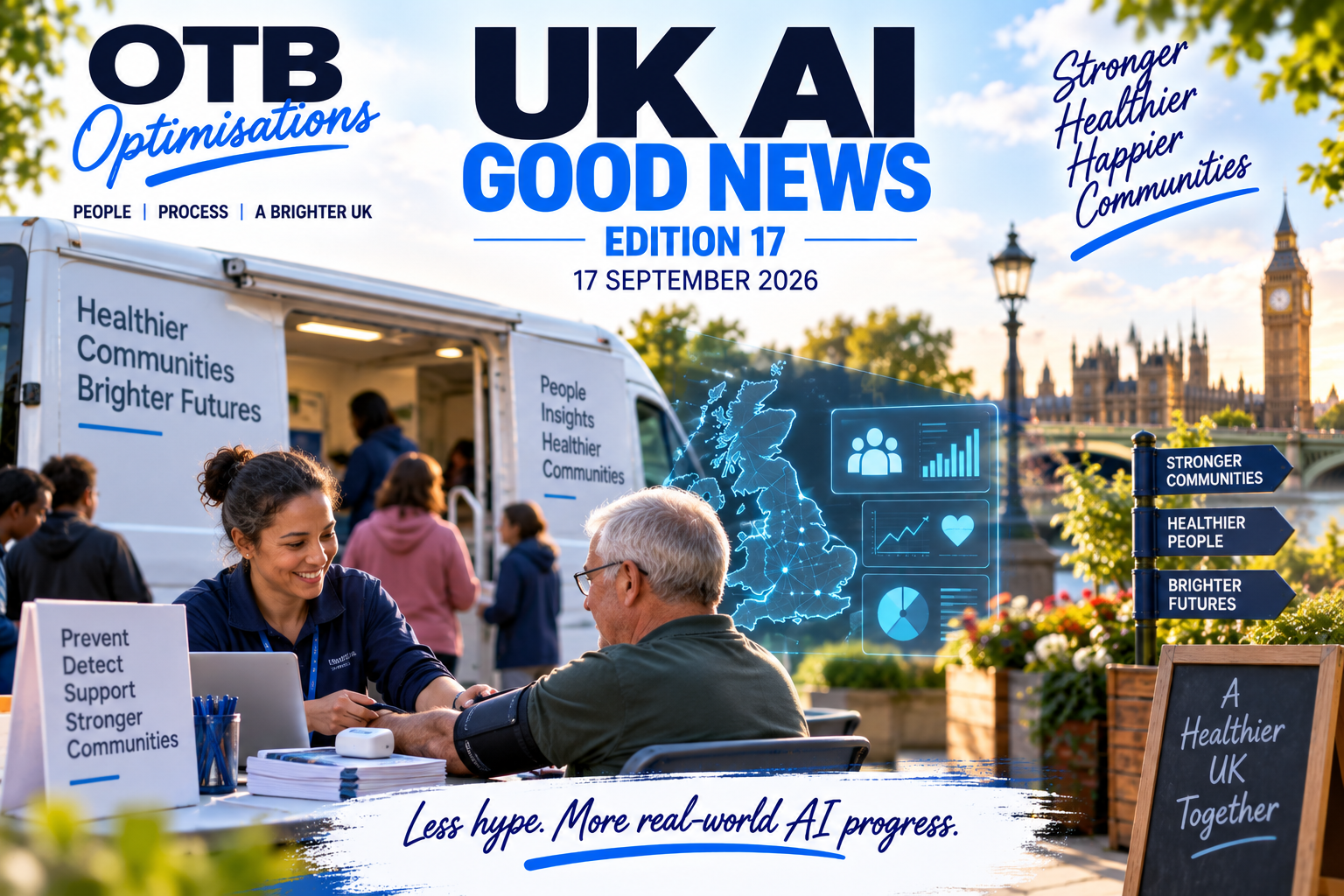
Today is a quieter day for genuinely strong UK AI good-news stories, but one fresh development published yesterday is worth an edition on its own.
And unusually, we already have some real-world pilot results rather than just promises.
AI helping find hidden health problems before people become seriously ill
Researchers at University of Warwick are leading Project SNOW, an AI-powered initiative designed to help healthcare providers understand where health problems are building up within communities and target preventative care at the people who need it most.
The problem they’re tackling is surprisingly fundamental.
Health services have lots of clinical data, but that often tells them about people after they have become ill and entered the healthcare system.
Project SNOW is trying something different.
It combines information from mobile health screenings, voluntary health reports, anonymised population movement patterns, deprivation information and census data. AI can then help turn that information into an evolving picture of where healthcare needs are concentrated.
The aim is to help the NHS and local services answer a much more useful question:
Where should we intervene before people become seriously unwell?
And there are already encouraging results
This is what makes today’s story stronger than a typical AI announcement.
An initial nine-week pilot across Barking and Dagenham, Havering and Thurrock provided free blood-pressure and cholesterol screening through 28 community deployments.
More than 687 people were screened and over 25 previously undiagnosed conditions were identified.
Perhaps most strikingly, the project reports that 77% of the people reached would not have accessed care through an existing NHS route.
The reported cost per patient also fell from £167 to £41, while patient satisfaction reached 99%.
The programme now aims to deliver more than 3,000 screenings over the next two years and refer more than 100 previously undiagnosed conditions to GPs.
Source: University of Warwick report, 16 September 2026 ↗
Why this one matters
AI in healthcare is often presented as a machine trying to diagnose somebody instead of a doctor.
This is different.
Here, AI is being used to help humans see a problem that is otherwise difficult to see: which communities might need help before people start appearing at hospitals and GP surgeries.
And there is something else I like about it.
Technology is only part of the solution.
The actual intervention is incredibly human: go into communities, offer people a simple health check and find problems earlier.
That’s a pretty good example of what AI for good should look like.
Less hype. More real-world AI progress.