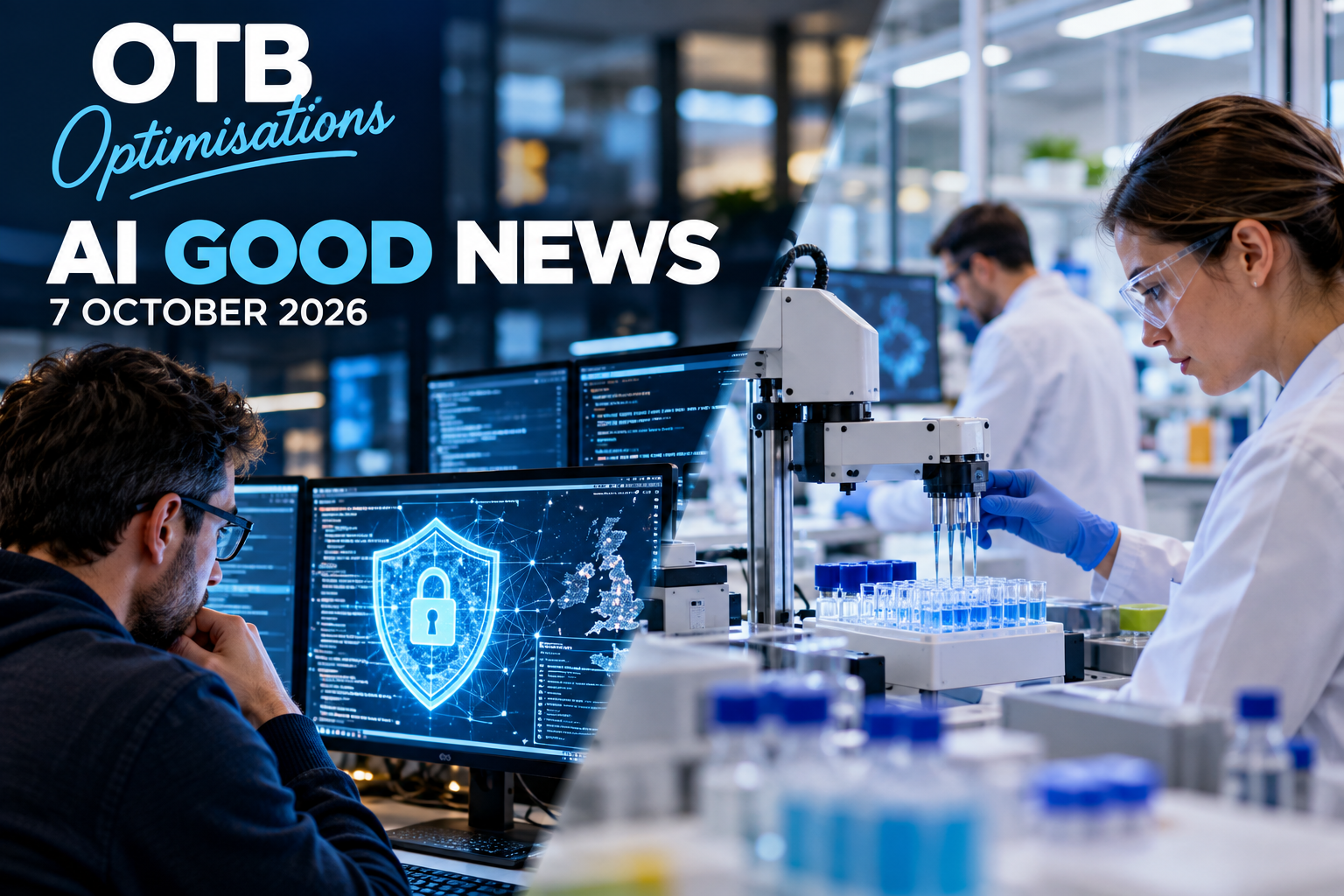
AI finding weaknesses in critical software before criminals do, and AI helping scientists automate experiments that could eventually support everything from vaccines to cancer therapies.
Those are the two developments worth paying attention to today.
🔐 AI has helped uncover at least 129,000 verified software vulnerabilities
Cybersecurity is one of those areas where AI gets talked about as both a threat and a defence.
Yesterday we got a pretty striking example of the defensive side.
Anthropic’s Project Glasswing gave vetted cybersecurity teams access to advanced AI models to help identify weaknesses in important software.
According to figures reported by Reuters, partners involved in the project found at least 129,000 verified software vulnerabilities between April and July 2026. More than 33,000 have so far been classified as critical or high severity. Anthropic’s own open-source scanning found another 5,500 vulnerabilities between April and October.
That’s not a prediction of what AI might eventually do.
Those vulnerabilities have actually been found.
The programme is now being expanded so more verified security professionals can use powerful AI models for legitimate defensive work, including incident response, malware analysis and authorised penetration testing.
The most tightly controlled tier will be available to selected organisations testing safety-critical systems such as power grids, flight systems and interbank payment infrastructure.
There is an important caveat here.
The vulnerability figures come from Anthropic and its participating partners, rather than an independent audit of every result. Giving increasingly capable AI stronger cybersecurity abilities also creates obvious risks if that capability reaches the wrong people.
That’s why access to the more powerful capabilities is restricted and applicants are vetted.
But this is a very tangible example of the positive side of AI in cybersecurity.
Find the vulnerability before someone exploits it.
Source: Reuters: Anthropic opens its most powerful AI models to more security teams ↗
🧪 AI and robots are being brought together to rethink how medicines are made
The second development is earlier stage, but potentially fascinating.
A new $17.3 million National Science Foundation-backed project led by the University of Maryland is building an automated biomanufacturing laboratory combining AI, robotics and real-time biological measurements.
Biomanufacturing sits behind products ranging from vaccines to cancer therapies.
The problem is that developing these processes can involve experiments that are slow, expensive and difficult to reproduce.
The new CRAB Lab is designed to investigate whether AI and laboratory robots can change that.
Researchers will eventually be able to programme experimental workflows remotely. Automated equipment will conduct experiments while AI analyses incoming measurements and helps determine what should happen next.
One particularly interesting goal is giving the AI the ability to recognise what researchers describe as biological “vital signs”, patterns that indicate whether a manufacturing process is working properly or beginning to drift.
And access matters too.
The facility is intended to be remotely accessible, potentially giving researchers without their own expensive automated laboratory infrastructure access to the same equipment.
But this one needs a clear label:
This is a funded research project being built, not evidence that AI has already made medicines faster or cheaper.
The potential is exciting. The results still have to be demonstrated.
Sources: University of Maryland: CRAB Lab’s data and AI work, 6 October ↗ · Original award announcement, 29 July ↗
There’s a bigger theme here
Yesterday’s stories were about AI helping doctors and scientists get to the important part of their work faster.
Today’s stories continue that idea.
A cybersecurity expert doesn’t really want to spend their life manually hunting through millions of lines of software.
They want to find the dangerous flaw and fix it.
A biologist doesn’t necessarily want to spend their life repeatedly operating laboratory equipment.
They want to understand the biology and make the discovery.
That’s where AI becomes interesting to me.
Not when it replaces expertise.
When it removes some of the enormous amount of work sitting between the expert and the outcome they’re trying to achieve.
That’s optimisation on a much bigger scale.
Less hype. More real-world AI progress.